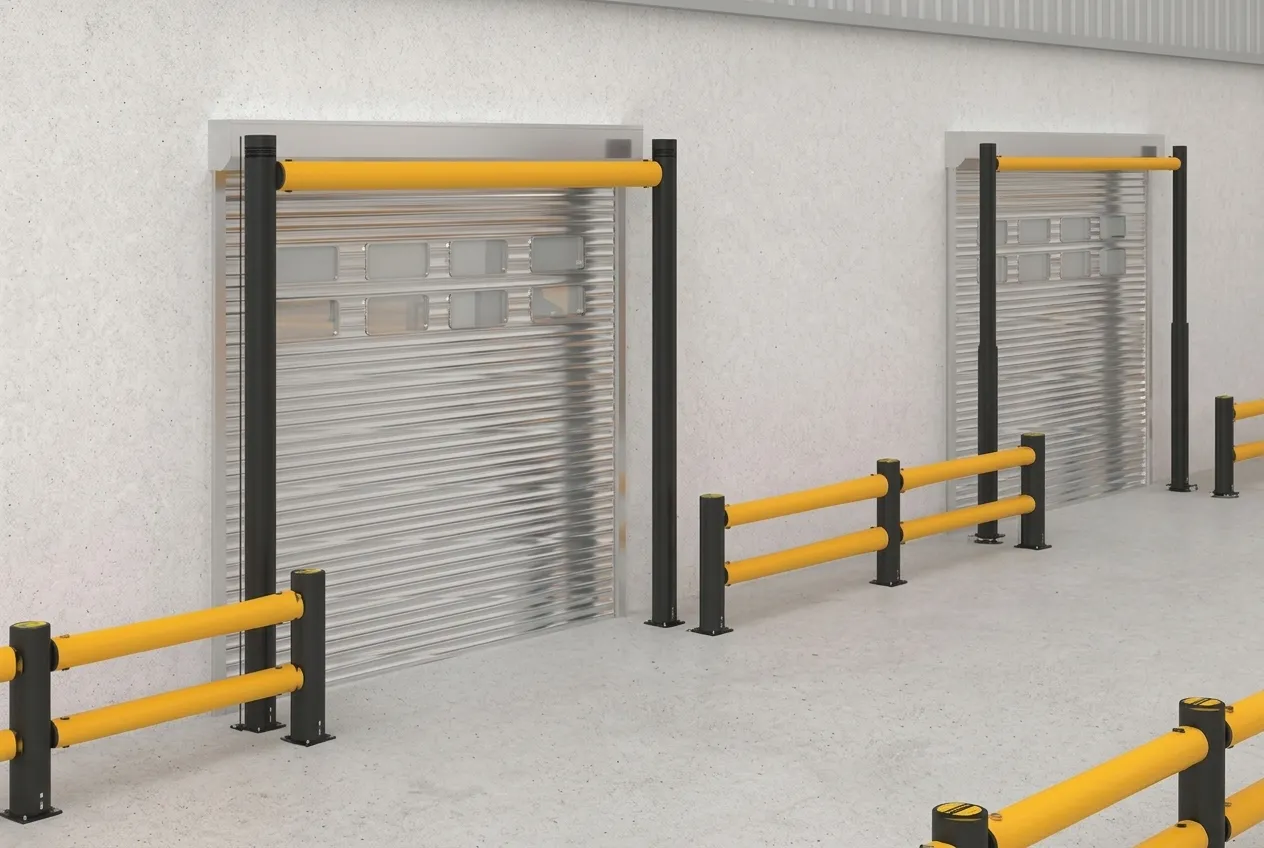
Calculating the Real ROI: Polymer Flexible Barriers vs. Traditional Steel
When Procurement departments or Supply Chain financial analysts review annual capital expenditure (CapEx) for a new facility layout, the line item for safety guardrails is often judged by a single, misleading metric: the initial purchase price per meter.
Under this narrow view, traditional structural steel always appears to win. It is inexpensive to source upfront, widely available, and a known commodity. But treating safety barriers as a one-time CapEx purchase is a fundamental accounting error. In high-throughput industrial environments, the true financial impact of a barrier system belongs under OpEx (Operating Expenses) and MRO (Maintenance, Repair, and Operations) budgets.
If you look closely at your annual facility maintenance logs, you will likely find that cheap steel is quietly draining your profitability. Let's break down the actual procurement math and examine how advanced polymer flexible barrier systems deliver genuine cost reductions and efficiency improvements.
The Total Cost of Ownership (TCO) Framework
In modern asset management, savvy financial decision-makers utilize a Total Cost of Ownership (TCO) model rather than relying solely on the upfront price tag. The TCO of an industrial safety barrier can be expressed through a simple operational equation:
Let’s analyze how the two materials perform across the lifespan of a busy logistics hub or manufacturing plant:
1. The True Cost of Installation Labor
Traditional rigid steel barriers are heavy and logistically cumbersome to handle. More importantly, because they transfer 100% of collision forces directly into the ground, they rely on rigid anchoring systems that frequently damage the concrete foundations upon impact. When a barrier fails and cracks the floor, the re-installation requires core drilling, patching, and extended labor hours.
In contrast, modular polymer systems utilize precise, heavy-duty anchor bolts designed for quick installation. Because the polymer material dynamically absorbs the kinetic energy during a crash, the stress placed on the concrete foundation is minimized. This keeps the floor intact and ensures that any layout alterations or module expansions can be handled rapidly with minimal labor overhead.
2. Deconstructing the MRO Budget Drain
Every time a rigid barrier suffers permanent deformation from a forklift, a purchase order must be generated for a replacement section. This isn't just a materials cost; it involves:
Admin costs for procurement processing.
Shipping and logistics fees for heavy replacement iron.
Scrap and disposal fees for the ruined metal.
Continuous repainting costs to combat scratches and rust.
A polymer flexible barrier system effectively eliminates this recurring loop. The material's elastic recovery allows it to flex under impact and instantly return to its original form. There is no structural degradation, no rust to treat, and zero need for a paint brush. By transitioning from a reactive replacement model to a zero-maintenance operational model, the ongoing OpEx for asset protection drops significantly.
Verifiable Performance: Removing Financial Risk
Many procurement managers hesitate to invest in polymer systems because "flexibility" can sound subjective. How can a financial team verify that a barrier will actually perform and protect millions of dollars in automated racking or production machinery?
The answer lies in standardized, third-party physical testing.
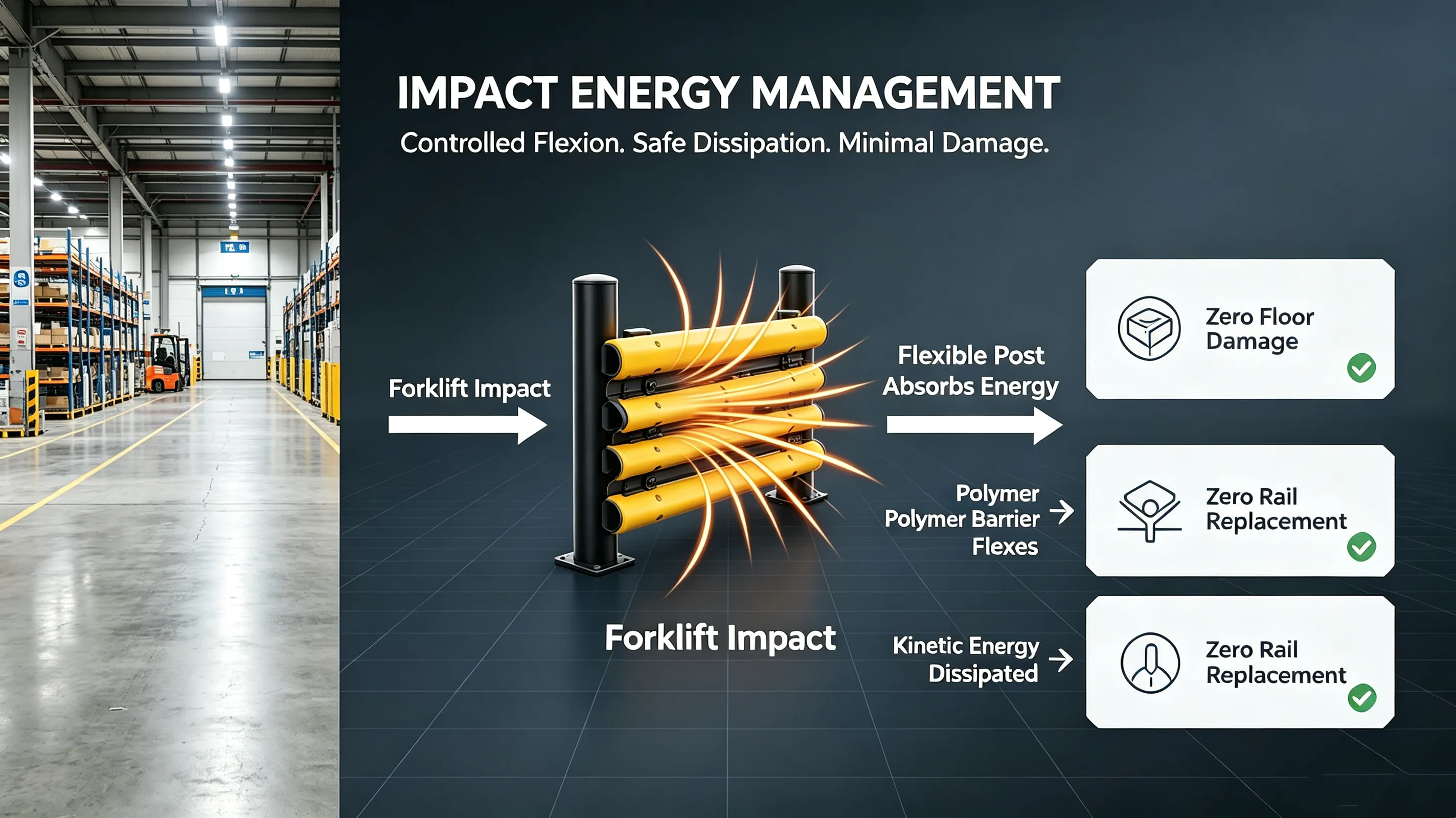
HOOGO’s flexible barrier ecosystem is fully compliant with the rigorous global PAS13:2017 standards and verified independently by TUV NORD. This certification means the energy absorption ratings (measured in Joules) are scientifically proven through strict impact testing protocols.
For your corporate risk management team, this TUV certification transforms a safety purchase from an unpredictable liability into a quantifiable, reliable shield for your warehouse infrastructure.
Corporate Alignment: What Global Leaders Already Know
Achieving high operational efficiency requires eliminating waste. This is why tier-one global enterprises with highly optimized supply chains—including Tesla Gigafactory Shanghai, NIO Automobile, BYD, GLP (ProLogis), and AS Watson Group—have systematically moved away from traditional rigid steel guardrails.
These industry leaders recognize that true cost reduction and efficiency enhancement isn't achieved by buying the cheapest iron available. It is achieved by deploying an engineered safety ecosystem that eliminates repetitive repair costs, reduces operational interruptions, and protects vital plant infrastructure over the long haul.
Conclusion
If your facility operates on a multi-year horizon, sticking with traditional steel is a recipe for predictable budget overruns. While the upfront investment for a TUV-certified polymer flexible barrier system is different from structural steel, the elimination of ongoing MRO expenses ensures a rapid turnaround on your capital allocation. Stop paying to fix the same square meter of your warehouse floor over and over again—switch to an engineered polymer solution designed for the modern balance sheet.
Related Products
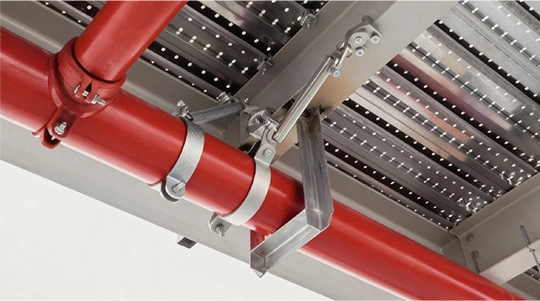
FM Approved Seismic Bracing Systems
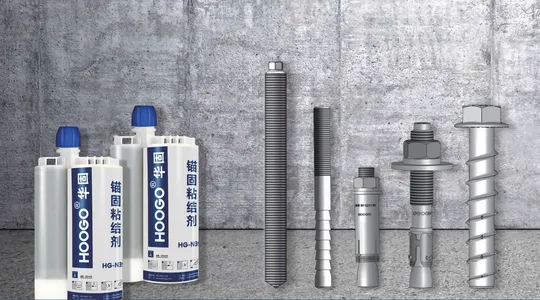
ETA Certified Anchor Fixing System