The Physics of Hail Resilience: Why HOOGO’s 50.8mm Impact Testing Matters for C&I Asset Protection
If you are developing or insuring a commercial and industrial (C&I) solar project, the latest risk data should have your full attention. The 2026 Solar Risk Assessment published by kWh Analytics reveals a stark reality: hail remains the single most expensive source of insured financial losses for solar projects. In fact, for roughly 52% of the contiguous United States, relying on basic, entry-level module specifications is no longer a viable risk strategy if you want to keep asset losses below the critical 10% value threshold.
When evaluating a system's durability, many procurement teams check if a panel has passed standard hail testing. However, there is a massive engineering gap between surviving a baseline laboratory test and protecting a multi-million-dollar industrial facility from real-world convective storms.
Let's look at the actual physics of hail impacts, compare the standard benchmarks, and examine how HOOGO's system-integrated design handles over 10 times the kinetic energy of conventional solar installations.
The Math Behind the Impact: Scaling the Destructive Energy
Many product datasheets look identical on the surface because they all claim "hail resistance." To understand why one system survives where another shatters, we have to look at the relationship between mass, velocity, and kinetic energy: Ek=½mv2
When you double the diameter of a hailstone, you don't just double the damage—the mass expands cubically, and the terminal velocity increases significantly. The difference between standard compliance and true property loss prevention comes down to these exact numbers:
The Baseline Entry Standard (IEC 61215): This standard tests a standalone module against a 25 mm (1-inch) ice ball traveling at 23 m/s. This delivers a baseline kinetic energy of approximately 2.0 Joules. For low-risk, benign climates, this product qualification is perfectly adequate for basic grid entry.
The FM 4478 Class 2 Baseline: The absolute minimum entry gate to secure an FM Approvals certification requires surviving a 31.8 mm (1.25-inch) impact.
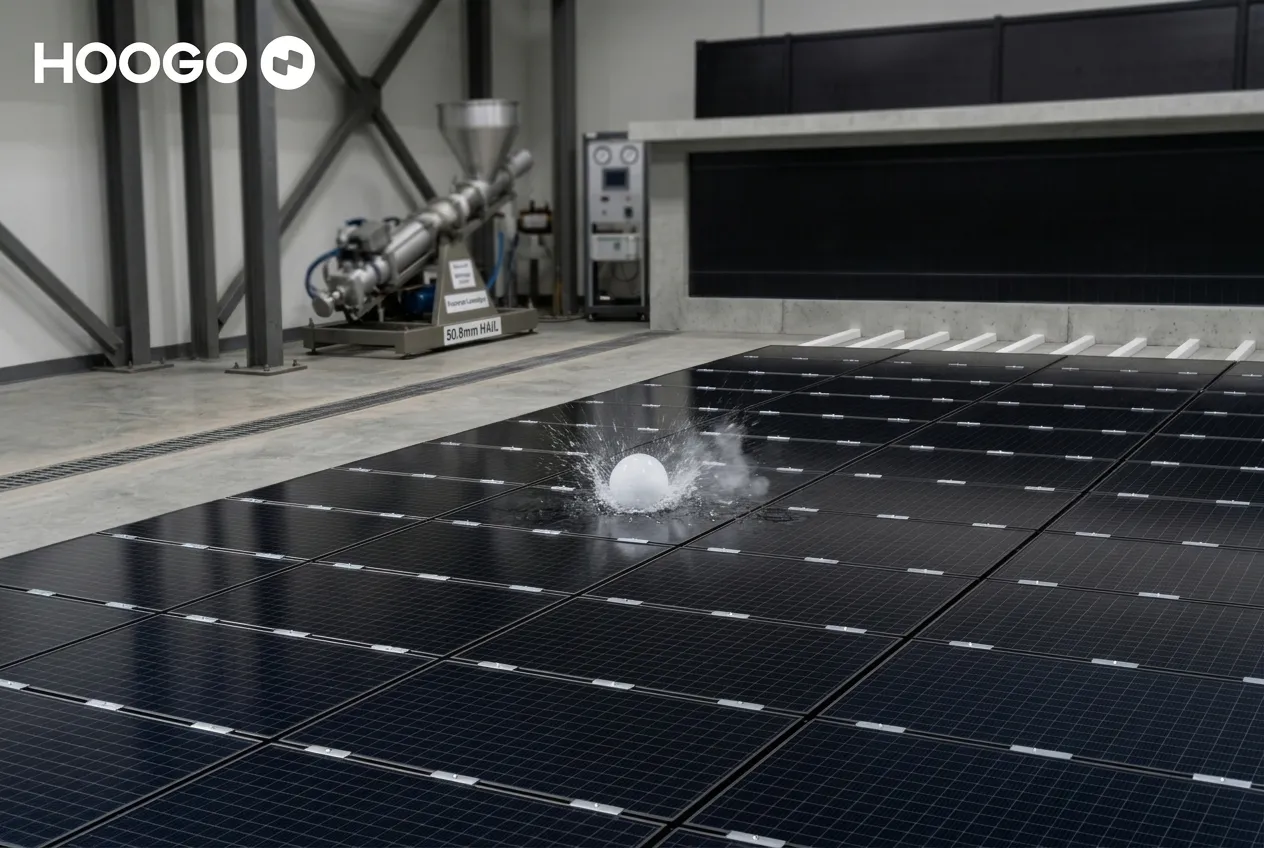
The HOOGO Performance Standard (FM 4478 Class 4): To meet the requirements of severe convective storm zones, HOOGO engineered its system to achieve Class 4 Hail Rating. This test fires a 50.8 mm (2-inch) golf-ball-sized solid ice missile at a terminal velocity of 35.1 m/s (approx. 78.5 mph).
The 10x Energy Reality
When that 50.8 mm ice ball strikes the HOOGO system, it delivers a massive 32.2 Joules of kinetic energy directly to the structure.
Comparing 2.0 Joules of baseline IEC testing to the 32.2 Joules of HOOGO's certified testing reveals that the HOOGO system withstands more than 16 times the kinetic impact energy of a standard panel.
Testing Framework | Hailstone Diameter | Terminal Velocity | Kinetic Energy | Protection Profile |
IEC 61215 Baseline | 25 mm (1.0 in) | 23.0 m/s | ~2.0 J | Basic product qualification; high risk in severe storm corridors. |
FM 4478 Class 2 | 31.8 mm (1.25 in) | 26.2 m/s | ~4.7 J | Minimum entry baseline for basic asset conservation. |
HOOGO System (Class 4) | 50.8 mm (2.0 in) | 35.1 m/s | ~32.2 J | Industrial Loss Prevention; capable of surviving golf-ball-sized impacts. |
Why Stronger Glass Alone Won't Save Your Project
A common trap in solar procurement is assuming that ordering thicker module glass solves the hail problem. In an industrial environment, a heavy impact does more than just break glass—it transfers an immense mechanical shock wave through the module frame, into the mounting brackets, and down into your facility's roof deck. If the mounting system is completely rigid or poorly integrated, that energy can cause micro-cracking in the silicon cells (which destroys power output over time) or structurally compromise the roof attachments.
HOOGO's approach shifts the focus from component-level thickness to System-Level Mitigation Synergy.
1. Hardened Structural Framing
The HOOGO system utilizes an optimized dual-glass structural layout (3.2mm + 3.2mm / 2.0mm tempered glass) supported by a high-tensile anodized aluminum alloy frame. This structure is engineered to absorb and distribute the localized 32.2-Joule shock load across the entire module perimeter, protecting the internal silicon cells from micro-cracking and latent hot-spot degradation.
2. High-Angle "Robust Stow" Compatibility
As the 2026 SRA report highlights, smart operational strategies are highly effective tools for minimizing hail impacts. One of the best ways to protect an asset is stowing the modules at a steep angle (at least 70 degrees) when a convective storm approaches.
HOOGO systems are specifically designed to coordinate with tracker and mounting assemblies that support rapid, high-angle Robust Stow positions (≥70°). By tilting the system steeply relative to the falling hail, you transform a direct, catastrophic perpendicular impact into a glancing blow, shedding the kinetic energy safely.
3. Preserving the Building Envelope and Roof Warranty
When severe weather hits a commercial building, the owner's primary asset is the roof itself. If a solar array shifts or transfers excessive force during a storm, it can damage the roofing membranes or compromise fastener integrity, leading to catastrophic leaks.
HOOGO rejects the "one-size-fits-all" universal clamp approach. We partner directly with premium roofing system manufacturers, ensuring that our hardware integrates seamlessly with high-grade industrial roofs (such as Butler/BlueScope systems). By validating the exact mechanical interface between the roof deck, the structural clamps, and our FM-approved modules, we ensure the complete assembly withstands severe dynamic forces without voiding your building's original structural warranty.
Financial Reality: Bankability and the Tightening Insurance Market
In 2026, insurance underwriters are no longer writing generic policies based on laboratory datasheets. They are analyzing real loss data. Because hail represents a massive percentage of recent financial losses for solar projects globally, asset owners who rely on standard, baseline certifications are facing soaring deductibles and restrictive policy terms.
Deploying a system that has successfully passed the FM 4478 Class 4 protocol—complete with documented, certified test reports for the specific roof-hardware combination—provides a tangible risk buffer for project financing. It gives underwriters the data-driven validation they need to offer favorable premium structures and smoother project bankability. You aren't just purchasing solar components; you are deploying an engineered loss-prevention solution.
The Bottom Line
Every standard has its place. IEC 61215 is an essential baseline tool for checking basic electrical qualification and product type approval. But when your facility sits directly in the path of unpredictable weather, relying on a baseline designed for 2.0 Joules of impact energy is a massive gamble.
By engineering a complete, system-level architecture certified to handle the 32.2 Joules of an FM Class 4 impact, HOOGO provides industrial assets with a robust defense against extreme weather. Protect your power generation, secure your roof's integrity, and stabilize your insurance position for the 25-year horizon.
Is your commercial roof ready for the changing risk environment?
[Contact HOOGO's Engineering Division for a comprehensive System Compatibility & Risk Assessment]
Related Products
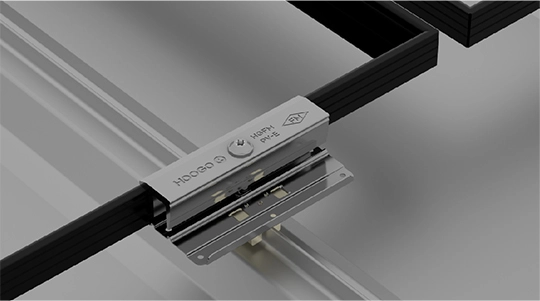
FM Approved Roof-Mounting PV Module Systems
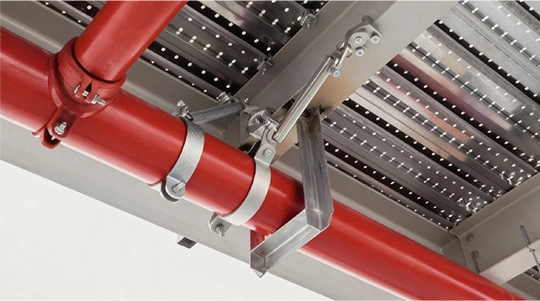
FM Approved Seismic Bracing Systems
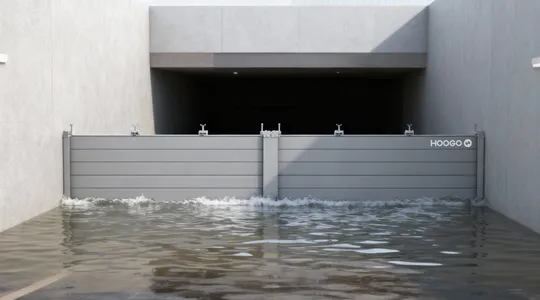
FM Approved Flood Barrier System
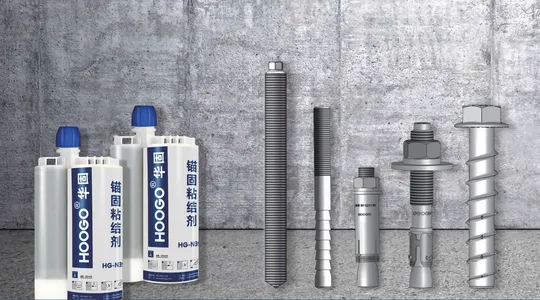
ETA Certified Anchor Fixing System
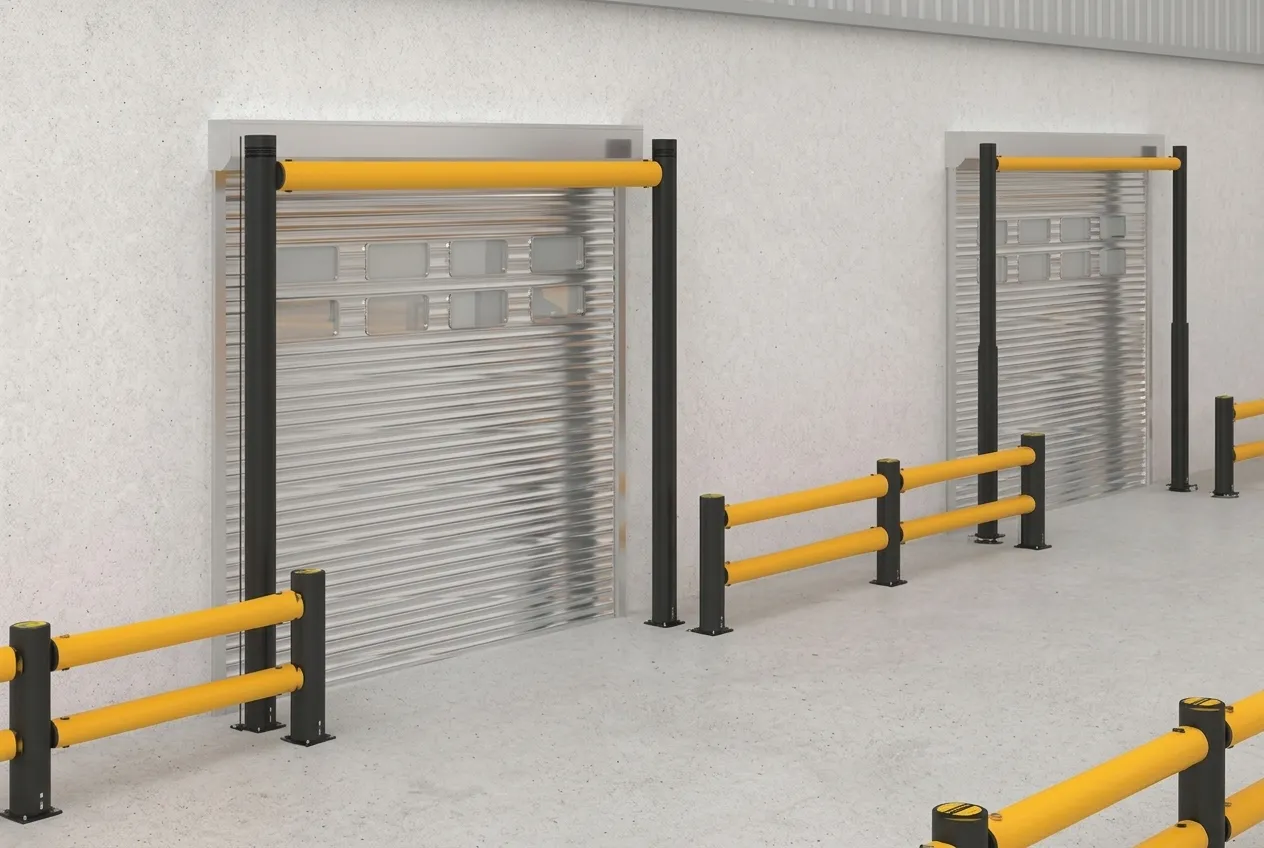
TUV Certified Flexible Barrier System